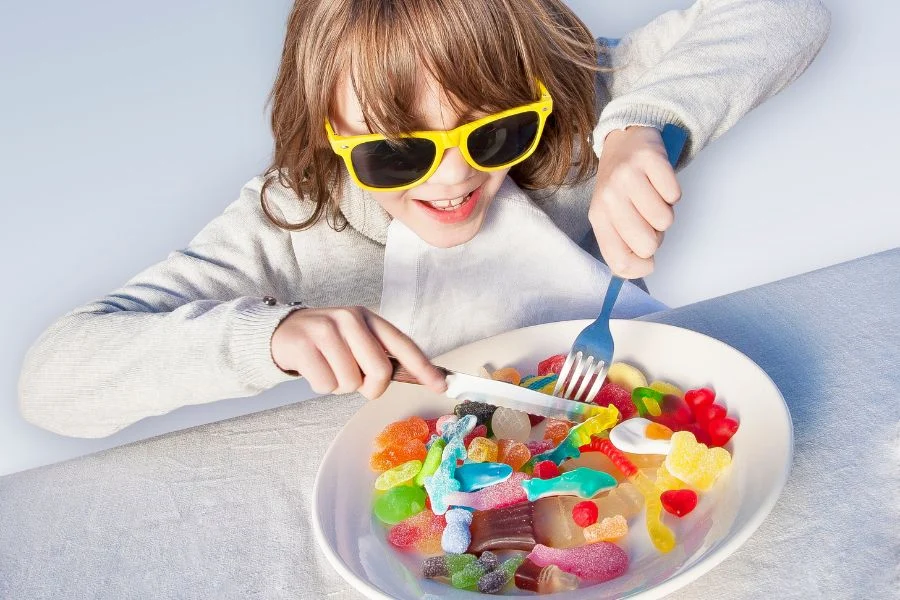
Halloween candy is part of the fun, and enjoying it does not have to come at the expense of healthy teeth.
Some treats are simply easier on teeth than others, and a few small habits can make a difference during Halloween week. Here is how our pediatric dental team in Reno looks at common candies, plus simple ways to protect your child’s smile and signs that it may be time for a dental visit.
Which Halloween Candy Is Hardest on Kids’ Teeth?
Cavities form when bacteria in the mouth use sugar to produce acids that weaken tooth enamel. The longer sugar and acid stay in contact with the teeth, the more opportunity they have to cause problems.
That means sticky, sour, and long-lasting candies tend to be tougher on teeth than treats that melt or rinse away quickly.
Sticky & Chewy Candy Like Caramels, Taffy, & Gummies
Caramels, taffy, gummy bears, fruit snacks, and chewy candies can stick in the grooves of molars and between teeth, where they are harder for saliva to wash away.
That does not mean kids need to avoid them altogether. Drinking water afterward and brushing and flossing later can help remove anything left behind.
Sour Candy
Sour candies often contain acids such as citric or malic acid, which create that tart flavor but can also temporarily soften tooth enamel.
Many sour candies are chewy too, so they tend to stay in contact with teeth longer. Water afterward can help rinse away some of that lingering sugar and acid.
Hard Candy & Lollipops
Jawbreakers, lollipops, and other hard candies dissolve slowly, which means teeth are exposed to sugar for a longer stretch of time.
There is also another reason to be careful with them: biting down on hard candy can chip or crack a tooth. If that happens, our pediatric emergency team can help.
Halloween Candy That Is Easier on Teeth
If you are comparing common Halloween treats, plain chocolate is usually one of the more tooth-friendly choices because it melts quickly and is easier to rinse away.
Chocolate without sticky fillings like caramel or nougat is typically easier to clean off the teeth.
Sugar-free gum can also be a good option, especially if it contains xylitol. Chewing gum increases saliva flow, which helps rinse away food particles and neutralize acids in the mouth.
The main takeaway is simple: candies that clear the mouth quickly are generally easier on teeth than ones that stay sticky or dissolve slowly.
Simple Ways to Protect Kids’ Teeth During Halloween
There is no need to make Halloween candy stressful. A few everyday habits can go a long way.
Eating candy with or shortly after a meal can be helpful because saliva production is already higher, which helps rinse the mouth naturally.
It is also better for teeth to have breaks between snacks rather than having sugar in the mouth throughout the day.
- Offer water with Halloween treats to help rinse the teeth afterward
- Enjoy candy with or after a meal when possible
- Give teeth some time between snacks
- Keep up with regular brushing and flossing, especially with sticky treats
- If your family ends up with more candy than you want around, consider sharing extras, saving favorites for later, or doing a fun candy trade-in at home
The goal is not to make candy off-limits. It is simply to pair Halloween treats with habits that are a little easier on teeth.
Brushing and Flossing After Halloween Candy
After sour or acidic candy, it is usually best to rinse with water first and wait about 30 minutes before brushing. Acid can temporarily soften enamel, so giving your mouth a little time allows the enamel to recover before brushing.
Flossing is especially helpful after sticky candy, which can get caught between teeth where a toothbrush cannot reach.
Younger children may still need help flossing or a quick check from a parent afterward. Our dental hygiene page has more tips for keeping a healthy daily routine.
When to Schedule a Post-Halloween Dental Checkup in Reno
If your child is already due for their six-month cleaning, November can be a convenient time to schedule it.
A professional cleaning can remove buildup that regular brushing may miss, and your dental team can check for any early signs of tooth decay.
If your child recently had a checkup and is not due again for several months, there is usually no need to schedule an extra visit just because Halloween has passed.
You may want to give us a call sooner if you notice changes in your child’s teeth or they begin mentioning sensitivity or discomfort.
Signs of a Cavity in a Child’s Tooth
Early cavities do not always hurt, so some signs can be easy to miss. Keep an eye out for:
- White or chalky areas on the tooth surface
- Brown or dark spots on a tooth
- A visible pit or small hole
- Sensitivity to cold, hot, or sweet foods
- A child suddenly chewing mostly on one side
- Food repeatedly getting stuck in the same area
- Ongoing bad breath that does not improve with brushing
If something looks different or your child says a tooth feels uncomfortable, it is worth having it checked.
Catching tooth decay early can often make treatment simpler and help prevent the area from getting worse.
Sala Family Dentistry: Pediatric Dentistry in Reno
Our pediatric dentistry team cares for children from their first tooth through their teenage years, with a focus on making dental visits feel comfortable and positive.
If your child is under three and has never been to the dentist, their first visit is free.
Whether your child is due for a routine cleaning or you noticed something after Halloween, schedule an appointment with Sala Family Dentistry in Reno. We are happy to take a look and help keep their smile healthy.
Related Posts

Contact
Phone | (775) 376-7914
Email | info@salafamilydentistry.com
Hours
| Mon - Fri | 7:00am – 5:00pm |
| Saturday | 7:00am - 3:00pm |
| Sunday | Closed |
Location